


The Leadership Series
Celebrate Emotional Safety
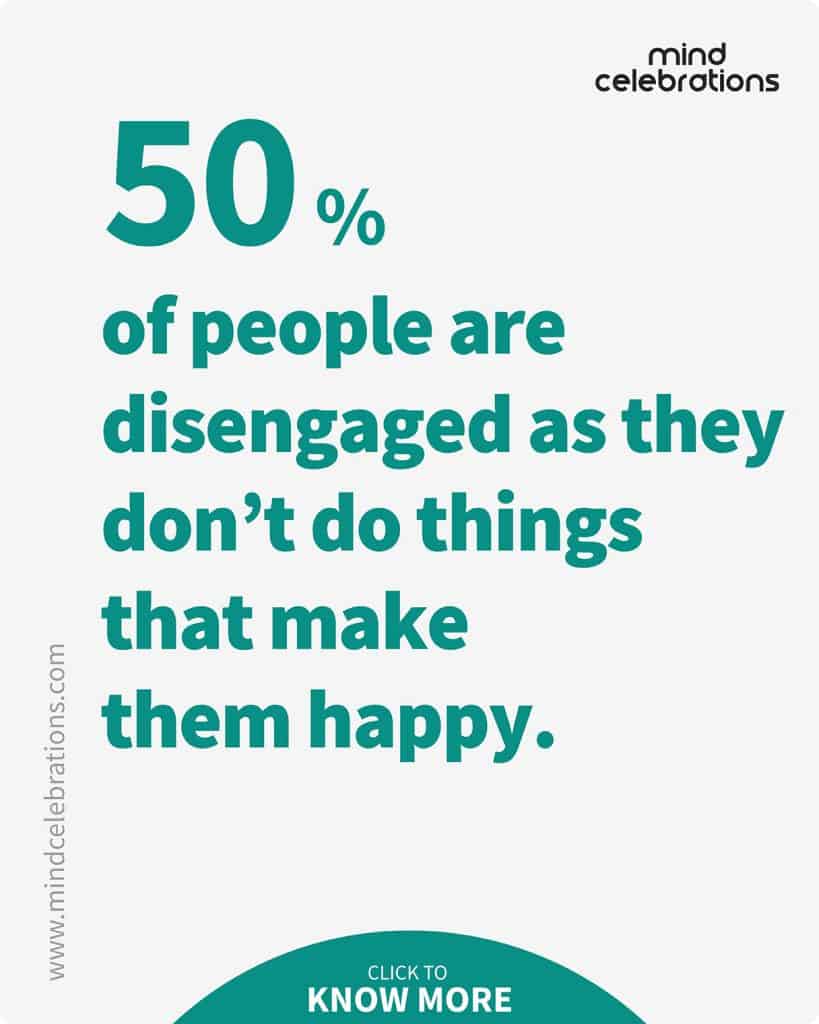
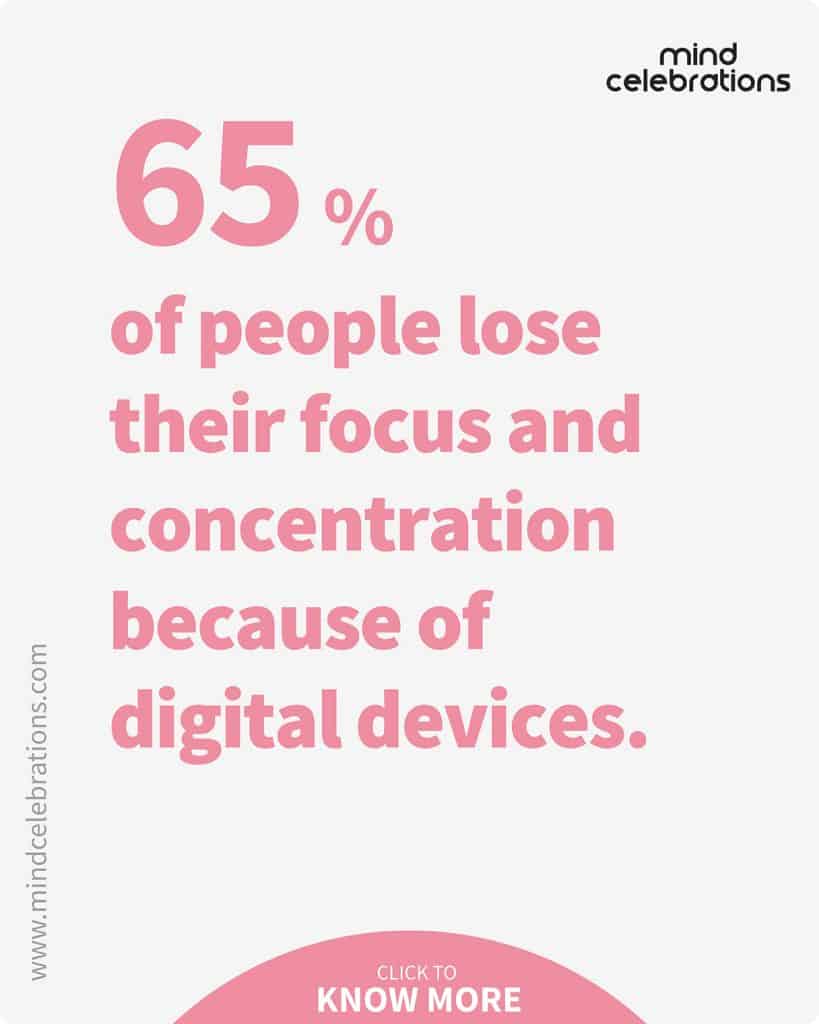
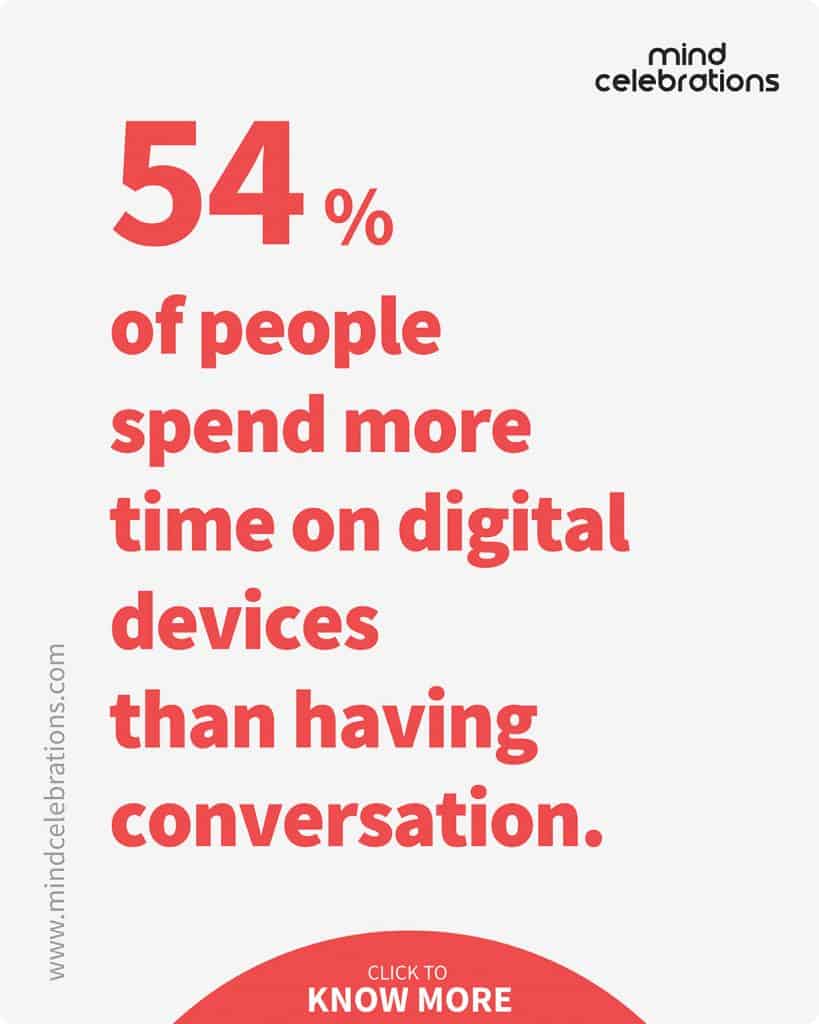
Transform your workplace to an emotionally safe environment conducive to
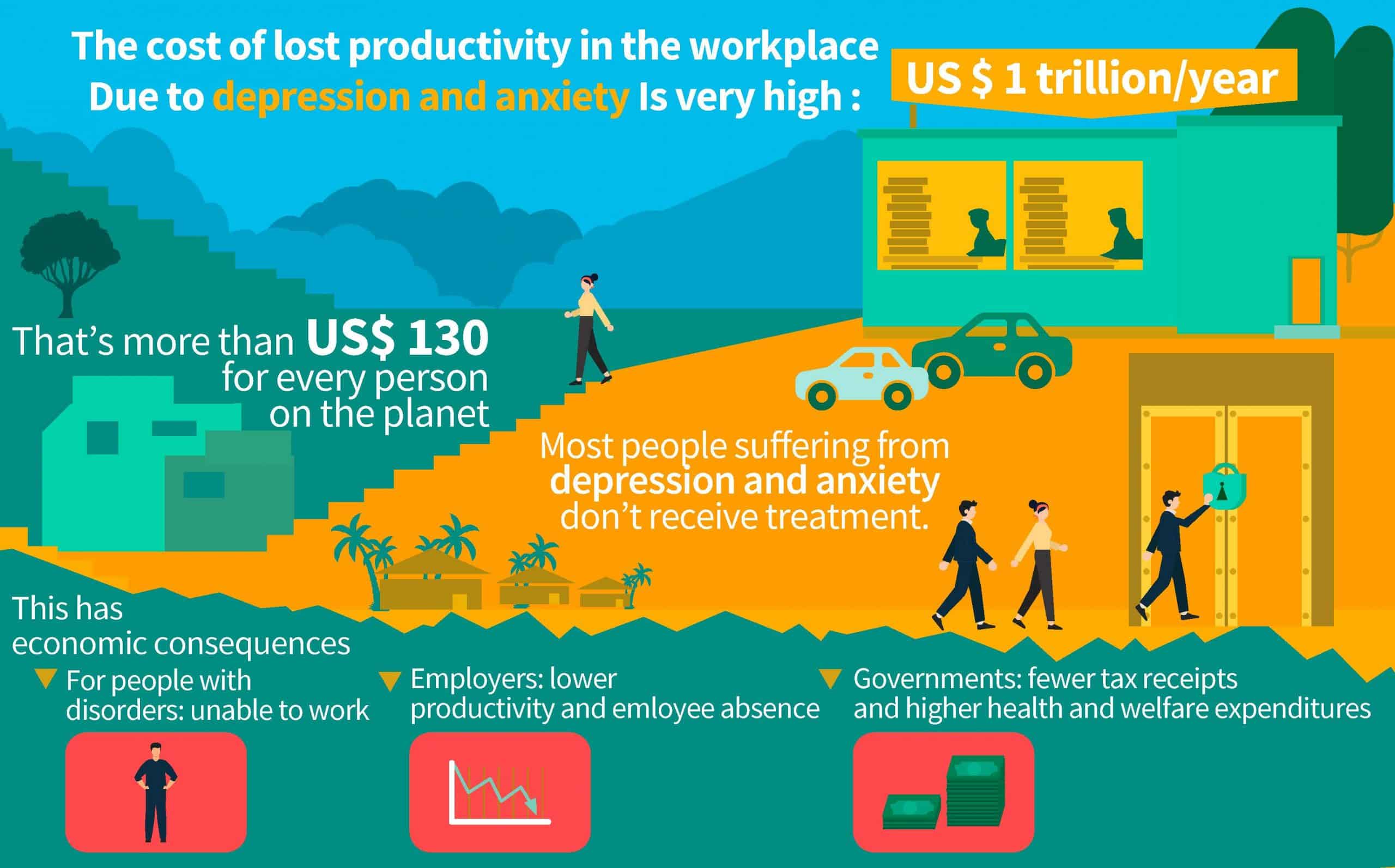
© Image and content courtesy WHO

Cohesive teams

Result oriented behaviour

Happier & productive minds

Work satisfaction

Robust organizational growth
Proactive Care. Tangible Results. Continual Progress.
Our solutions are oriented towards creating a thriving organisational work culture of emotional safety and mental well-being resulting in

Pioneering preventive mental healthcare solutions

Fun methods for participative learning and retention

Emotional fitness through practising daily rituals

Measurable and longstanding behavioural changes

Sustained learning through rewiring the mind and body

Simple self-assessment to measure progress
Pioneering preventive mental healthcare solutions
Emotional fitness through practising daily rituals
Sustained learning through rewiring the mind and body
Fun methods for participative learning and retention
Measurable and longstanding behavioural changes
Simple self-assessment to measure progress
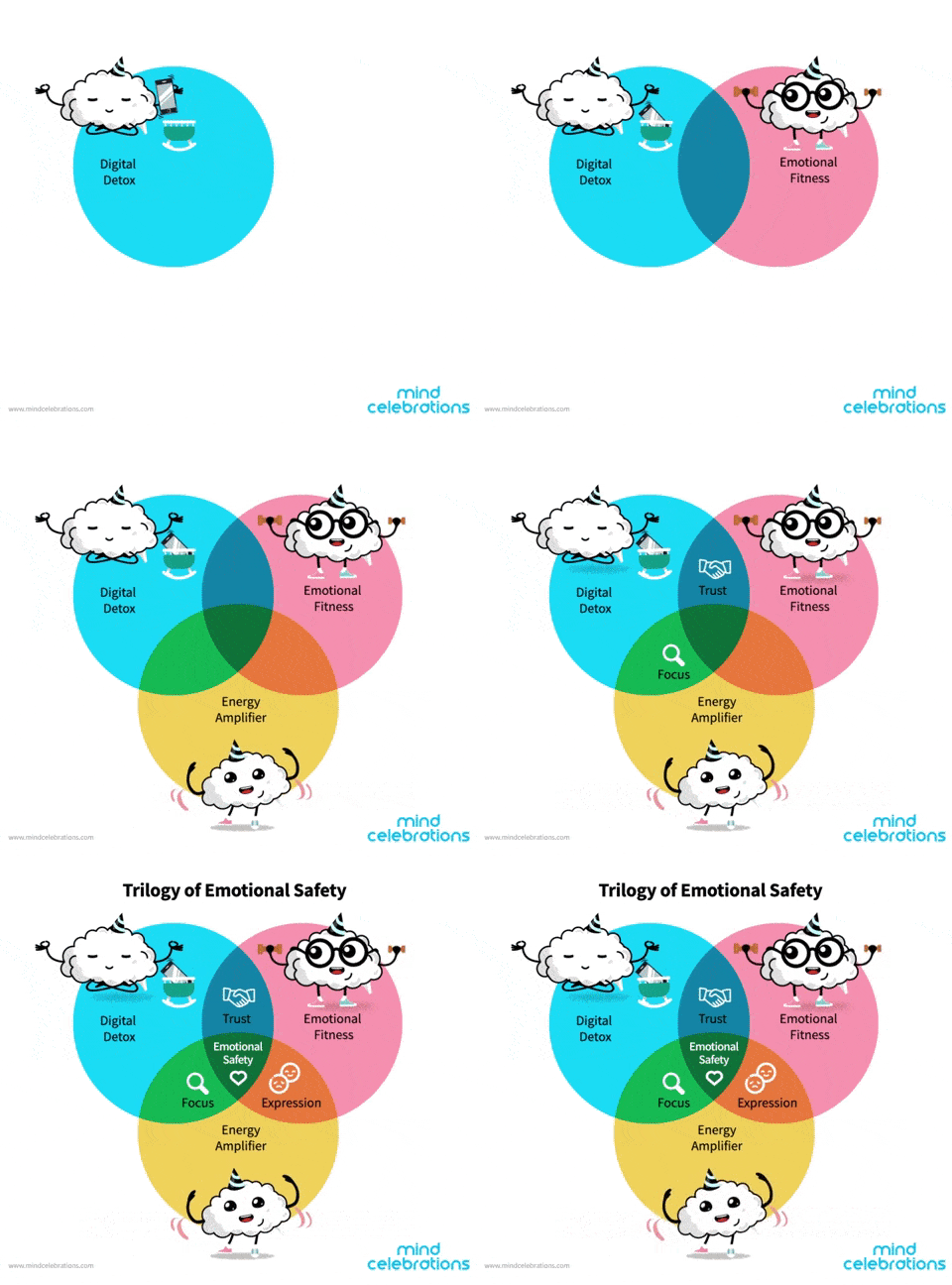
3 lenses of Mind Celebrations

We challenge the approach to mental health - from reactive to preventive.

We encourage fun daily rituals - sustain and nourish mental health everyday.

We can measure mental health. Just like your weight, blood pressure & temperature.
Address. Grow. Transform. Celebrate.
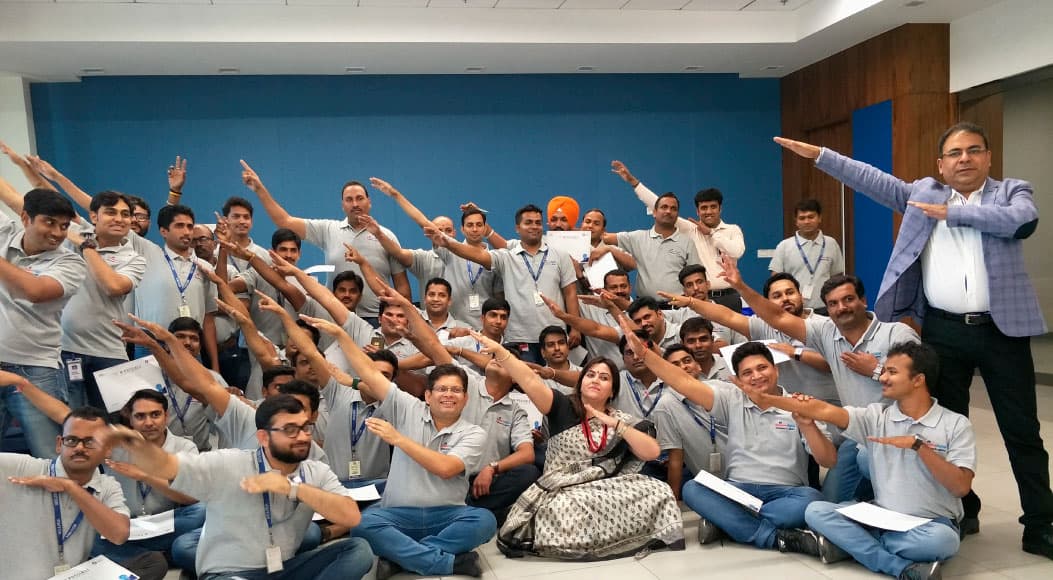
Our tailored interventions celebrate individuality. Customization to individual, group or
organizational goals allows us to facilitate winning solutions with committed results.
Organization

Corporate

Government or Public Sector Undertaking

Educational Institution | Universities | Colleges | Schools | Training Institutes

Medium, Small and Micro Enterprise

Franchisee Partners
Individual

Business Owner / Leader

Working Professional

Sportsperson

Student

Homemaker
Partners. Collaborators. Friends.
CLIENT LIST












I strongly recommend Mind Celebrations as a program as it teaches simple to execute mind hacks/practices and can be done, along with other daily rituals we follow in our life. The simple yet beautiful agenda of Mind Celebrations to put focus on MENTAL HEALTH PROACTIVELY rather reactively is another reason for organizations and leaders to take note for this concept. I wish all the best to Mind Celebrations Team for future.
Mrs. Urvi Aradhya
Chief Human Resource Officer
K Raheja Corp
Get in touch
Let’s talk
Employee counselling
Employee counselling is a psychological technique with the main objective to support the employees by providing them a listening non judgement space.[show_more more=MORE less=LESS]It encourages individuals to bring forth inner guidance as a compass to solve the prevailing problems and improve physical and mental health in turn impacting performance.
A professionally trained counsellor helps employees by engaging in purposeful conversation thus creating a conducive ecosystem. By establishing trust, the one counseled can express their thoughts and feelings in such a way without being judged, slowly accepting their situation, see their difficulty more objectively, with less anxiety and tension. Its basic purpose is to assist the individual to make their own decision from among the choices available to them.
At Mind Celebrations, we have made the process of employee counselling more fun by following two principles –
- We recommend and conduct counselling sessions proactively, to ensure that employees build Emotional Fitness and Positive Mental Health preventively
- We call our counselling sessions as One to One Mind Celebrations Sessions (and not counselling for a reason to help break the stigma). Every individual is unique and his mind is to be celebrated as we celebrate & appreciate our physical being every day.
[/show_more]
Corporate Wellness Program
As defined by Harvard Business Review, Workplace Wellness is – an organized, employer sponsored program that is designed to support holistic wellness [show_more more=MORE less=LESS] wellness of employees (and, sometimes their families) as they adapt & sustain behaviors that reduce health risks, improve quality of life, enhance personal effectiveness, by benefiting the organizations bottom-line.
Corporate wellness training programs are a conscious choice of enhancing wellbeing within an organization, aimed to be a catalyst for a holistic welfare of the employees along with achieving business outcomes. It comes from a fundamental understanding that anything that puts us in lack of ease is disease and what brings us to a sense of ease is wellness.
Benefits of corporate wellness program are:
For Employees
1. Feel nurtured and taken care of
2. Feeling of belongingness and morale is higher
3. Healthier Life
4. Work life harmony
5. High performance and productivity
For Organizations
1. Reduced absenteeism on account of sick leaves
2. When present at work employees are more focused and productive
3. Achievement of business goals
4. Attract and retain talent
5. Lowers the cost of attrition (vacancy, hiring & retraining)
[/show_more]
Anxiety at work
Each individual is in search for peace and happiness. All our actions are in turn a conscious need for peace that we are looking for. Somewhere along [show_more more=MORE less=LESS] the way our actions elude our peace further away. The two basic emotions that evade this peace is the experience of anxiety and guilt. Both these emotions hog the minds’ ability to be in the “NOW”. Anxiety is perceived as a sense of impending fear of the future and guilt is always a regret about the past.
Experiencing anxiety at workplace is not productive for attaining business objectives and achieving revenue outcomes. Workplace anxiety is actually contagious and spreads faster than any virus, hindering team productivity and paralyzing potential. It delays individual’s ability to solve problems and take timely decisions.
Physiologically according to the Mental Health Foundation, the signs and symptoms of anxiety can include:
- Restlessness
- A feeling of dread
- Feeling ‘on edge’
- Difficulty concentrating
- Difficulty sleeping
- Irritability
- Dizziness
- Nausea
- Heart palpitations
- Sweating
- Shortness of breath
- Headaches
- Dry mouth
- Fatigue and
- Muscle tension.
- Constant worrying
Symptoms can culminate to cause panic attach. With rapid heart rate & palpitations, shortness of breath, chest pains, feeling faint & feeling of terror, all of which can combine to mimic the common signs & symptoms of a heart attack.
Anxiety triggered by an external impending sense of danger is natural and is the body’s way of coping by flight or fight. This is called episodic stress.
[/show_more]
Mindfulness training
At Mind Celebrations, for us MINDFUNNESS takes precedence over MINDFULNESS
[show_more more=MORE less=LESS] Mindfulness training is a mental training practice that teaches you to slow down racing thoughts, let go of negativity, and calm both your mind and body.
. It combines meditation with the practice of mindfulness, which can be defined as a mental state that involves being fully focused on “the now” so you can acknowledge and accept your thoughts, feelings, and sensations without judgment.
Mindfulness is the practice of purposely focusing your attention on the present moment—and accepting it without judgment. Mindfulness is now being examined scientifically and has been found to be a key element in stress reduction and overall happiness.
Techniques can vary, but in general, mindfulness meditation involves deep breathing and awareness of body and mind. Practicing mindfulness meditation doesn’t require props or preparation (no need for candles, essential oils, or mantras, unless you enjoy them). To get started, all you need is a comfortable place to sit, three to five minutes of free time, and a judgment-free mindset.
Some of the immediate impact of Mindfulness training on individuals or teams is
- Reduces Stress
- Lower Heart Rate
- Improved Immunity
- Better Sleep
Some of the techniques and Mindfunness ways are –
- Basic mindfulness meditation– Sit quietly and focus on your natural breathing or on a word or “mantra” that you repeat silently. Allow thoughts to come and go without judgment and return to your focus on breath or mantra.
- Body sensations– Notice subtle body sensations such as an itch or tingling without judgment and let them pass. Notice each part of your body in succession from head to toe.
- Sensory– Notice sights, sounds, smells, tastes, and touches. Name them “sight,” “sound,” “smell,” “taste,” or “touch” without judgment and let them go.
- Emotions– Allow emotions to be present without judgment. Practice a steady and relaxed naming of emotions: “joy,” “anger,” “frustration.” Accept the presence of the emotions without judgment and let them go.
- Urge surfing– Cope with cravings (for addictive substances or behaviors) and allow them to pass. Notice how your body feels as the craving enters. Replace the wish for the craving to go away with the certain knowledge that it will subside.
[/show_more]
Stress Management at workplace
The entire perspective of managing stress is a reactive approach of treating oneself after problems happen. Human beings carefully [show_more more=MORE less=LESS]
build their physical immunity and health including heart and sugar by working on a proactive philosophy. Unfortunately, mental health and therefore stress management is dealt with an approach of a postmortem.
At the Mind Celebrations we rephrase stress management to Resilience building. We encourage individuals to follow mind hacks on a daily basis to build Mental muscle.
While. stress management at work needs the support of organizational culture of Emotional safety and the availability of an ecosystem that is effectively used to prevent stress and build Mental fitness. It also needs leadership and managers to sustain and nurture teams to feel the emotional safety environment. It is finally the responsibility of every employee to take initiative to help themselves. Responsibility towards one self, by getting help and daily practice of tools learnt is imperative to build resilience and Grit.
Few tools for stress management
- Breadth work
- Positive imagery
- Emotional freedom techniques
- Systemic body part Relaxation
- Digital Detox post work hours and on weekends
- Exercise
- Sharing feelings with friends and family.
- Saying no to multitasking
- Cultivating Emotional safety at work
[/show_more]
Employee Assistance Program
As defined by SHRM (Society for Human Resource Management), an employee assistance program (EAP) is a work-based intervention, designed to [show_more more=MORE less=LESS] assist employees in resolving personal problems that may be adversely affecting their performance. Internationally EAPs have assisted workers with issues like alcohol or substance abuse; however, in India, they cover a broad range of issues such as child or elder care, relationship challenges, financial or legal problems, wellness matters and traumatic events like workplace bullying and violence. Programs are delivered at no cost to employees by stand-alone EAP vendors or providers who are part of comprehensive health insurance plans. Services are often delivered via phone, video-based counseling, online chatting, e-mail interactions or face-to-face. As per Business Group on Health, 217 million days are lost every year due to absenteeism and presenteeism (coming to work but unable to focus & deliver). This translates into $16.8 billion lost in productivity every year.
Mind Celebrations has a vision to create an emotionally safe world /organizations. We recommend to change the paradigm of EAP’s from reactive to proactive, we encourage employees to get help preventively and build daily emotional fitness. Our focus is to change employee assistance program to every one’s acceleration program. At Mind Celebrations, our communication is based on very simple principle of enjoying rituals of Mental Health on daily basis using fun ways to build organizations collective Mental Health. Globally we have changed the paradigm of mindfulness to mindfunness.
Mind celebration has introduced Employee Assistance Programs in India with clear objective to, inspire & engage employees to participate and facilitate the Human Resource Teams for tracking the individual’s journey of building mental health preventively. The two pillars for higher engagement for our EAP are – Collaboration & Competition within.
[/show_more]
Happiness at Workplace
Despite the existing psychological research of the relationship between happiness and productivity, happiness at work has traditionally been seen as a potential by-product of positive [show_more more=MORE less=LESS] outcomes at work, rather than a pathway to business success. Happiness in the workplace is usually dependent on the work environment and the ecosystem. During the past two decades, maintaining a level of happiness at work has become relevant due to the intensification of work caused by economic uncertainty and increase in competition. In fact, companies with higher-than-average employee happiness, exhibit better financial performance and customer satisfaction. It is thus beneficial for companies to create and maintain positive work environments and leadership that will contribute to the happiness of their employees.
Happier employees do better on all fronts, from day-to-day health to productivity to career advancement, and this consistently perks up the bottom line for the organization as a whole.
Workplace happiness can be defined as people feeling good and recovering from adversity; when they have close, supportive social connections; and they believe that their presence in the world matters.
The pillars on which workplace happiness can be built and nurtured are
• Purpose
• Engagement
• Resilience
• Kindness
[/show_more]
Employee Happiness
Creating Employee Happiness is tricky and does need effort from both, employer and the employee to create ecosystem where employees feel [show_more more=MORE less=LESS] happy. Happy employees deliver happy customers, higher revenues & profits, they are engaged and absorbed in their day-to-day work and bring in higher productivity.
The pillars of creating Employee Happiness can be captured as “MAGIC”.
(M) Meaning: Your work has purpose beyond the work itself. What I do must have some significance to me; it must mean something to me personally, and on more than just a surface level. To me, my work is something of value, something of worth. When my work has meaning to me, what I do has greater purpose.
(A) Autonomy: The power to shape your work and environment in ways that allow you to perform at your best. Do I have the freedom and empowerment to perform my job in a way that I do best? It allows me, as an individual, to create or shape my role and environment in a way that is best for me and for the organization.
(G) Growth: Being stretched and challenged in ways that result in personal and professional growth. Our internal speed of change and growth must match (or exceed) the external rate of change. The ability to develop, grow, and progress in a job provides challenge and excitement that benefit not only the individual but also the company.
(I) Impact: Seeing positive, effective, and worthwhile outcomes and results from your work. The adage “nothing breeds success like success” holds true here. When employees give their all, yet have little impact on the organizations or team’s success, engagement is difficult to cultivate. On the other hand, if what I am doing is making an impact (on the company, the world, students, patients, etc.), I am often willing to go through tough times if I hope to make an impact. This is also where recognition and feedback fit in.
(C) Connection: The sense of belonging to something beyond yourself. Employees need to feel a connection to those around them. Similarly, my connection to the organization—whether or not I feel a part of the organization—will often dictate my level of commitment.
[/show_more]
Stress at work place
Stress is a reaction to a perceived situation – it isn’t about the actual situation. We usually feel stressed when the demands of the [show_more more=MORE less=LESS] situation are greater than our resources to deal with that situation.
Triggers can be internal or external.
Some internal triggers are Human beings perceive situations from their colored ways of viewing the world. They have automatic negative thoughts that cloud clarity or past beliefs that don’t allow them to be in the present moment.
Some external triggers at work leading to stress are:
- High external work load & long working hours without the ability of inner resources to deal with it.
- Not feeling appreciated within organization
- Lack of role clarity
- Feeling isolated and not belonged
- Organizational bullying.
- Poor trust in teams
- Lack of psychological safety or emotional safety.
- Lack of family support because of poor family policies and employee assistance programs
- Blurring work life boundaries
- Culture of always being on (due to excessive use of digital devices).
Some of the Symptoms of stress at work place
Physical. – headaches, fatigue, acidity and digestive issues, high blood pressure and sugars.
Mental – difficulty in getting sleep and preoccupation with thoughts, with or without poor quality of sleep. Lack of focus at work, and increasing sick leaves, irritability and anger are common symptoms of work place stress
Dealing with work place stress the Mind Celebrations way
- Organizational perspective of investing in dealing with mental health and fitness as a preventive measure to be incorporated as organizational strategy.
- Giving all employee equal opportunity to mental health proactively and encouraging use of the ecosystem provided to build Mental muscle.
- Measuring daily steps to Mental fitness by every employee.
- Build Emotional safety at work in culture and organizational process
- Encourage leaders to be Emotionally safe & extending emotional safety to others at work.
[/show_more]
Psychological Safety
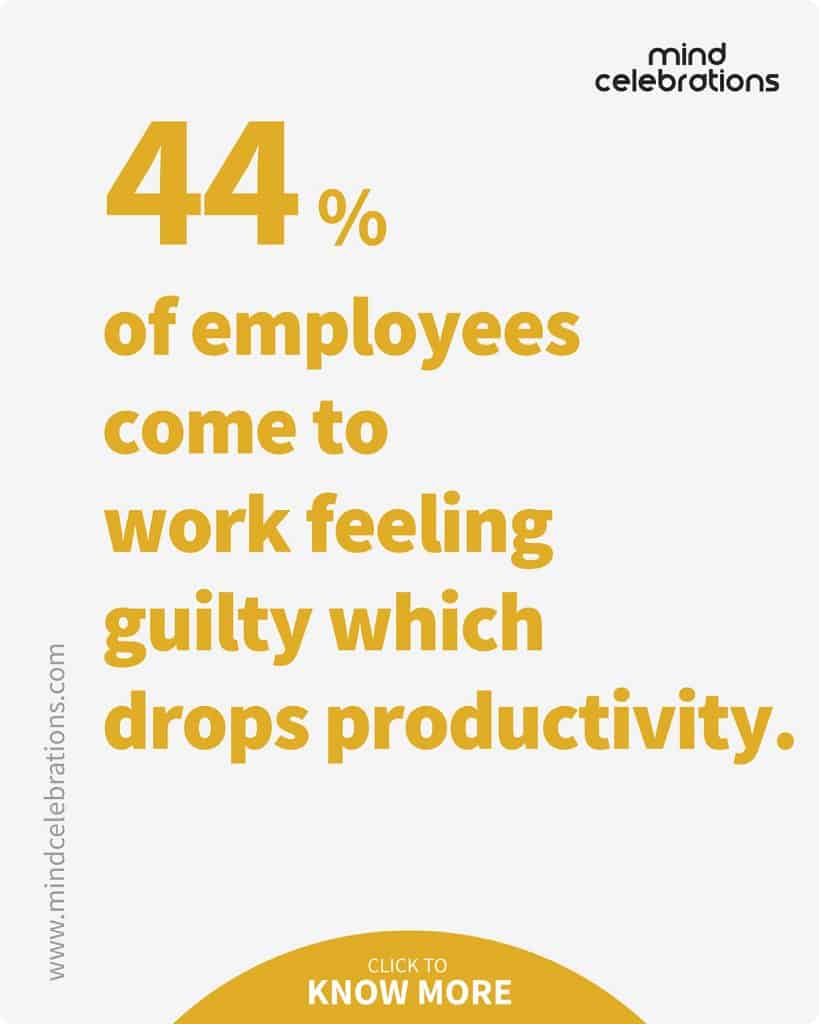
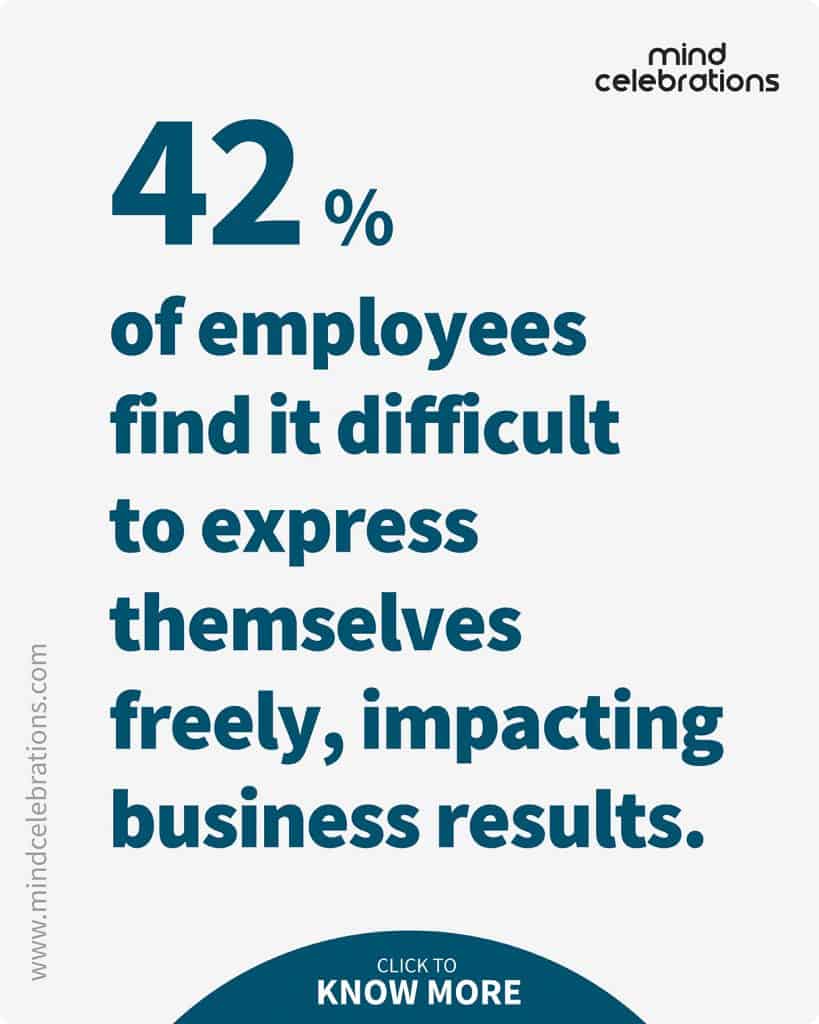
Psychological safety is defined as the freedom to Express oneself in ways that is conducive to the others, without a fear of being punished [show_more more=MORE less=LESS] or humiliated. Psychological safety paves the way to success. If you do not feel safe and belonged in a group you will restrict idea to yourself and not speak up. You have a fear of being ridiculed that hinders your performance and productivity. The sheer fear of this being held against you, refrains you from taking initiatives or risks needed for achieving business goals or being creative in solutions at work. Low psychological safety, therefore, gets in the way of both team performance, innovation, learning, and personal success. For you to be successful in your team, and “as a team,” psychological safety is the enabler.
At Mind Celebrations we recommend incorporating Psychological safety at work as part of organizational culture. We also believe that investing in building it as an ecosystem is a competitive strategic advantage of organizations over the market. It integrates the return on investment with the return on intelligence within the organization.
[/show_more]
Employee Assistance Program Services: Your Partner in Employee Mental Health
Employee Assistance Program Services (EAP Services) are specialized workplace initiatives designed to support employees facing personal or professional challenges that impact their mental health and productivity. These services provide confidential access to counseling, psychological support, and resources aimed at improving overall well-being.
The significance of EAP services in the workplace lies in their ability to foster a healthier, more resilient workforce. By addressing issues such as stress, anxiety, family conflicts, and substance abuse early, organizations can reduce absenteeism, enhance employee engagement, and boost job satisfaction.
In India, the rise of EAP Services Providers reflects growing awareness about mental health’s role in organizational success. Leading providers offer comprehensive programs including 24/7 helplines, online counseling, manager training, and wellness workshops tailored for diverse industries. These offerings mark a progressive shift towards embracing employee mental health as a critical component of corporate culture.
Understanding Employee Assistance Program Services
Employee Assistance Program (EAP) services in India play a vital role in supporting employees through various challenges they may face, both personally and professionally. Here’s an insight into how EAP services benefit individuals and contribute to their overall well-being:
1. Supporting Employees
EAP services offer a safe space for employees to discuss and address issues affecting their mental health, work performance, and personal life. By providing access to trained professionals, employees can receive guidance and support tailored to their needs. Finding the right employee counsellor is crucial in this process.
2. Benefits for Mental Health
EAP services focus on improving mental health outcomes by offering counseling, therapy sessions, and resources that help individuals cope with stress, anxiety, depression, or other psychological concerns. These services aim to enhance emotional well-being and resilience among employees. An important aspect of this is mental hygiene, which involves managing negative thoughts and stress at work.
3. Confidentiality and Accessibility
One of the key advantages of EAP services is the assurance of confidentiality. Employees can seek assistance without fear of judgment or repercussions, as these programs prioritize privacy. Additionally, the accessibility of EAP services, whether through online platforms or helplines, ensures that employees can reach out for help whenever needed.
By fostering a supportive environment and providing resources for mental health care such as mental health assessments to track emotional health and energy levels, EAP services contribute significantly to creating a healthier and more productive workforce in India.
Components of EAP Services in India
Employee Assistance Programs in India incorporate several vital components tailored to meet the diverse mental health needs of employees.
1. Online Counseling Sessions
Online counseling sessions offer immediate support and flexibility for employees facing various challenges.
- Provide immediate, confidential access to qualified counselors via digital platforms.
- Facilitate flexible scheduling, overcoming geographical and time barriers.
- Support a wide range of issues including stress, anxiety, depression, and personal challenges.
2. Training for Managers and HR Teams
Training programs empower leaders to identify and address mental health concerns effectively.
- Equip leadership with skills to recognize early signs of mental health concerns.
- Foster empathetic communication and effective intervention strategies within the workplace.
- Encourage creating an inclusive environment that supports psychological well-being.
3. Webinars and Workshops
Webinars and workshops cover essential topics related to mental health and well-being.
Topics typically covered include:
- Stress management techniques to handle workplace pressures effectively.
- Building emotional intelligence for improved interpersonal relationships.
- Resilience training to help employees adapt positively to change and adversity.
- Mindfulness practices such as meditation and yoga for enhancing focus and relaxation.
- Work-life balance strategies promoting sustained productivity without burnout.
These components work synergistically to strengthen organizational culture and empower employees with tools for maintaining mental health resilience. Additionally, incorporating regular mental health assessments can provide valuable insights into emotional fitness, energy levels, and digital habits of employees, further enhancing the effectiveness of these programs.
Additional Components Enhancing EAP Services
Integrating assessments into EAP programs can provide valuable insights into employees’ well-being and job fit. By incorporating psychometric assessments during recruitment, organizations can better understand candidates’ mental health needs and potential stressors, thus ensuring a good fit for both the individual and the company.
Handling critical incidents with psychological first aid is crucial in maintaining a supportive work environment during challenging times. EAP services that offer immediate psychological support and intervention can help employees cope with trauma or crises effectively.
Analyzing psycho-social risks for workforce well-being involves identifying factors that may impact employees’ mental health and productivity. By conducting thorough assessments, EAP providers can tailor their programs to address specific risk factors within an organization, fostering a healthier and more resilient workforce. Such tailored approaches often include implementing strategies that align with the findings from recent studies on workplace mental health, further enhancing the effectiveness of EAP services.
Benefits of Employee Assistance Programs for Organizations
Impact of EAP services on workplace morale and productivity
Employee Assistance Programs (EAPs) play a crucial role in enhancing workplace morale by providing employees with the necessary support to navigate personal and work-related challenges. By offering confidential counseling and mental health resources, EAP services empower employees to address issues effectively, leading to reduced stress levels and improved job satisfaction. This, in turn, fosters a positive work environment, boosts employee morale, and enhances overall productivity within the organization. Additionally, integrating corporate wellness programs alongside EAPs can further promote a healthy lifestyle among employees, contributing to their overall well-being.
ROI associated with implementing EAP programs
Implementing EAP programs can yield a significant return on investment for organizations. Studies have shown that for every dollar invested in EAP services, there is a substantial cost savings related to decreased absenteeism, enhanced employee retention, and improved overall well-being. By prioritizing employee mental health through EAPs, organizations can create a more engaged workforce, reduce turnover rates, and ultimately drive business success. Furthermore, the effectiveness of these programs in addressing mental health issues is supported by research indicating that such interventions lead to substantial improvements in mental health outcomes.1
Conclusion: Partnering with EAP Services for a Mentally Healthy Workplace
EAP services play a crucial role in promoting employee mental health and organizational growth. These programs provide employees with the support they need to navigate personal and work-related challenges, fostering a positive work environment that boosts job satisfaction, productivity, and retention.
It is essential for organizations to consider implementing an EAP program as a means of creating a mentally healthy workplace. By collaborating with a trusted EAP services provider in India, companies can make a significant difference in employee well-being, leading to improved performance and decreased absenteeism.
Prioritizing employee mental health through EAP services allows organizations to cultivate a resilient workforce that drives success and innovation.
FAQs about Employee Assistance Programs in India
1. What is the main purpose of an Employee Assistance Program?
Employee Assistance Programs (EAPs) aim to provide confidential support and resources to help employees manage personal and work-related challenges that may impact their well-being and job performance. These programs often include employee counseling services that are tailored to individual needs.
2. How do Employee Assistance Programs benefit both employees and organizations?
EAPs benefit employees by offering mental health support, counseling services, and resources to improve overall well-being. For organizations, EAPs can enhance productivity, reduce absenteeism, boost morale, and contribute to a positive work culture. Moreover, they can be part of broader corporate wellness programs aimed at promoting a healthier lifestyle among employees.
3. Are Employee Assistance Programs confidential?
Yes, confidentiality is a key aspect of EAP services. Employees can seek assistance knowing that their privacy will be respected, and information shared during counseling sessions will remain confidential.
4. How can organizations measure the success of their Employee Assistance Programs?
Organizations can measure the success of EAP programs by tracking metrics such as utilization rates, employee feedback, absenteeism levels, productivity improvements, and overall impact on workplace culture.
5. What are some key considerations when choosing an EAP provider in India?
When selecting an EAP provider in India, organizations should consider factors such as the provider’s experience, range of services offered (including employee counseling), confidentiality policies, accessibility of services, customization options for specific organizational needs, and cost-effectiveness. It’s also important to ensure that the chosen provider has a proven track record in delivering effective Employee Assistance Program services.
FAQs (Frequently Asked Questions)
What is the main purpose of an Employee Assistance Program (EAP) in India?
The main purpose of an Employee Assistance Program (EAP) in India is to provide confidential support services that promote employee mental health and well-being, helping employees manage personal and work-related challenges effectively.
How do Employee Assistance Programs benefit both employees and organizations?
Employee Assistance Programs benefit employees by offering counseling, training, and resources to improve mental health, while organizations gain through enhanced workplace morale, increased productivity, and a positive return on investment (ROI).
Are Employee Assistance Programs confidential and easily accessible in India?
Yes, EAP services in India prioritize confidentiality and accessibility to ensure employees feel safe seeking help without fear of stigma or privacy breaches.
What components are typically included in EAP services provided in India?
EAP services in India commonly include online counseling sessions, training programs for managers and HR teams, webinars and workshops on mental health topics, psychometric assessments during recruitment, critical incident response, and psycho-social risk analysis.
How can organizations measure the success of their Employee Assistance Programs?
Organizations can measure EAP success by monitoring improvements in workplace morale, reductions in absenteeism, enhanced employee productivity, feedback from participants, and analyzing the overall return on investment associated with the program.
What should organizations consider when choosing an EAP provider in India?
When selecting an EAP provider in India, organizations should evaluate the provider’s expertise, range of services such as counseling and training offerings, confidentiality practices, technological accessibility like online platforms, and unique features that align with the company’s specific needs.
Mind Blogs
Professional Assistance Program in India: How Mind Celebrations is Redefining Professional Support at WorkEmployment Assistance Programs by Mind Celebrations: A Smarter Way to SupportEmployee Wellness Plan: Mind Celebrations’ Way – A Complete Guide for Today’s WorkplacesYoga as Therapy: A Holistic Path to Healing Mind and BodyMental Health Assessment: A Complete Guide to Understanding Your Emotional Well-beingEmployee Counselor & Employee Wellness In Today’s Corporate RealmStress Management Strategies: Redefining Workplace Wellbeing with Mind CelebrationsFree Therapist Online: Bridging the Gap Between Access and ActionUnderstanding Symptoms of Depression in Women: A Preventive Lens by Mind CelebrationsStress Relief Activities: Proactive Mental Wellness with Mind CelebrationsOnline Mental Health Test: A Preventive Lens Toward Emotional FitnessCorporate Employee Wellness Programs Reimagined: Mind Celebrations’ Preventive Approach to Workplace Well-BeingEAP India: How Mind Celebrations Is Redefining Workplace Well-BeingStress Reduction Management with Mind Celebrations: A Proactive and Preventive Approach to Healthier WorkplacesEAP Services: Mind Celebrations’ Proactive Blueprint for Healthier, Happier WorkplacesMental Health Test: A Crucial First Step Toward Emotional Well-beingEmployee Wellness Programs: The Game-Changer For Your Organization’s NeedsEnabling Support: The Organization’s Role in Effective EAP DeliveryThe Strategic Role of HR in Employee Assistance ProgramsIdentifying Symptoms of Depression: Creating Psychological Safety at the WorkplaceEssentials of a Good Employee Assistance Program in IndiaStress Reduction: How to Take Control of Your Mental HealthMental Hygiene and Mental Health: Addressing Negative Thoughts in Life and WorkBenefits of Building Autonomy and Psychological Safety in the WorkplaceDelivering Autonomy Through Psychological Safety at WorkplaceMental Hygiene Matters: Addressing Negative Thoughts in Life and WorkHello, Chatgpt. Is AI impacting my Mental Health?How to find the right Employee Counsellor?Understanding Mental Health AssessmentEmployee Resilience and Corporate Wellness5 Red flags at WorkplaceEmotional Hygiene5 Effective ways to deal with Burnout and WorkloadSelf care at WorkplaceHow to get rid of Emotional Hangover?Understanding Gen-Z EmployeesTrue colors: Courage & Compassion in building Inclusivity for LGBTQ communityStress Management at WorkplacePsychological SafetyEmployee CounselingDeciphering Anxiety at WorkCorporate Wellness ProgramsEmployee Assistance Program – EAP in IndiaHappiness ContinuumMoving from Mindfulness to MindfunnessProductivity Tools – Moving Smartly towards Being Clear.Mindful LeadershipBringing Humanness into Strategy, Electronics and DigitalizationPurpose Driven WorkEmotional FitnessAre you a Video Conferencing Zombie?